LaGrange County, Indiana
The History of Big Long Lake
Big Long Lake lightly hides a long history. Tucked into Milford Township in LaGrange County, Indiana — northeast of South Milford and north of Kendallville — the lake has been a gathering place for well over 150 years, first for the farm families who settled its shores, then for the resort-goers who came to swim and dance, and now for the community of cottages that rings the water today.
Before the cottages: "Long Lake" and its first families
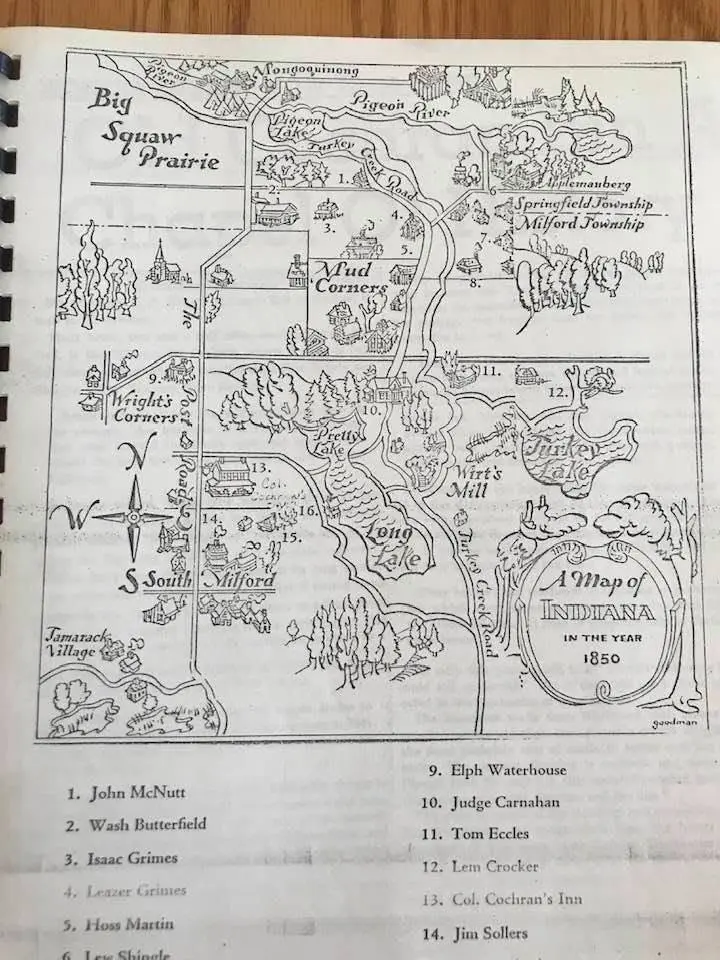
On the earliest maps, our lake carried a simpler name: Long Lake. A township map from around 1850 shows it sitting among familiar neighbors — Pretty Lake, Pigeon River, and the little crossroads settlement of Mud Corners (later renamed Mt. Pisgah) — alongside long-vanished landmarks like Wier's Mill and "Col. Cochran's Inn." County records suggest the community was formally established around 1874, and an original abstract of title from the 1800s still survives for a shoreline parcel once known as Greenwood Landing.
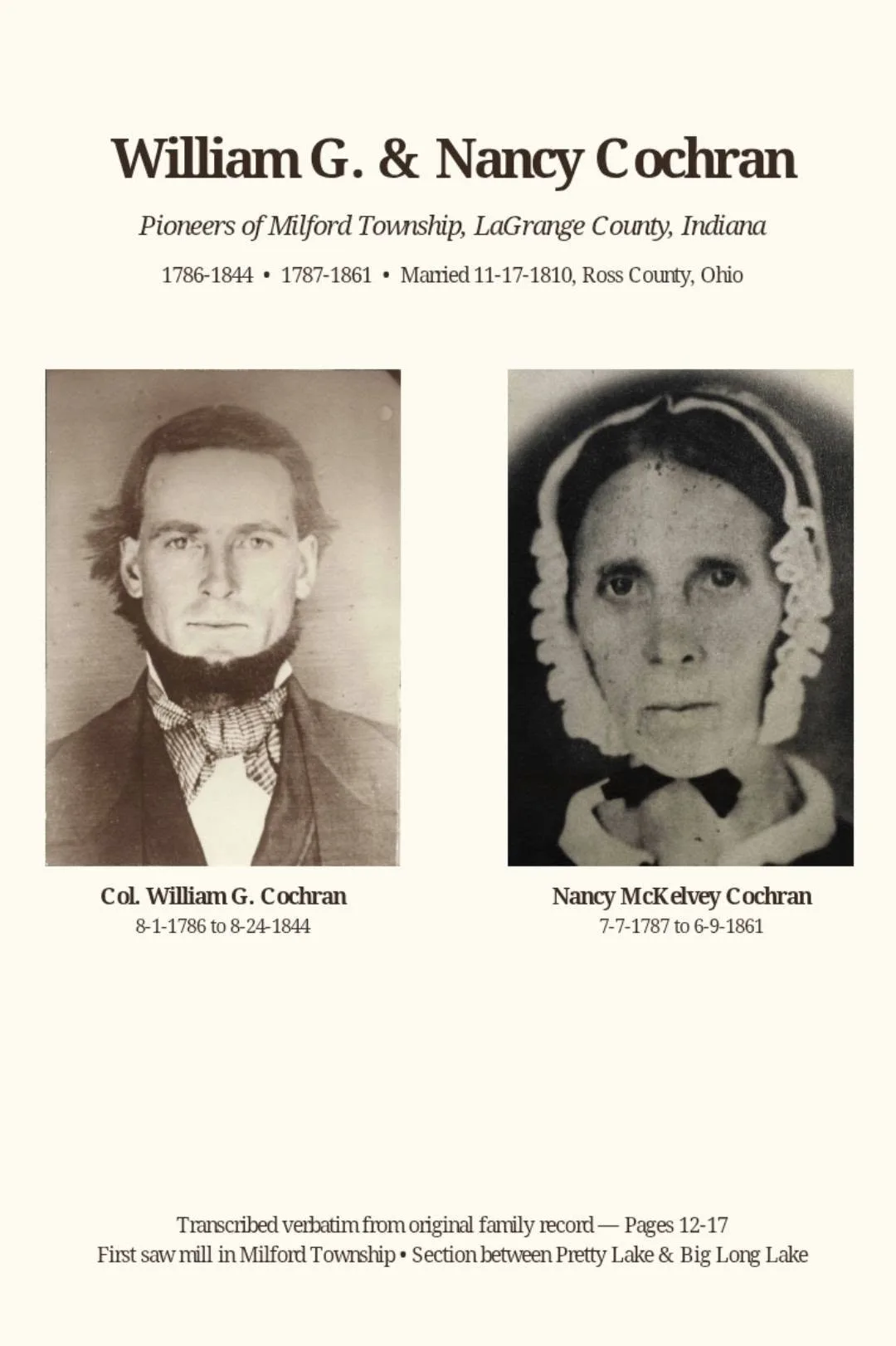
The land around the lake first belonged to the Cochran family. William and Nancy Cochran were among the area's earliest settlers, and William — along with his sons and grandsons — owned much of the ground here before it was ever divided into cottage lots. Col. Cochran also ran a tavern, a stopping point in the days of stage roads and horse travel. Local historians believe Cochran's Tavern once stood near the site of today's trading post; in 1969, the county historical society was preparing to move and preserve the old building when it burned down — possibly deliberately. In those early years the lakeshore also held a mill, a dam, a scattering of homes, and a small cemetery, most of it near what is now the public access.
The resort era: Hartzell and the "pleasure resort" years
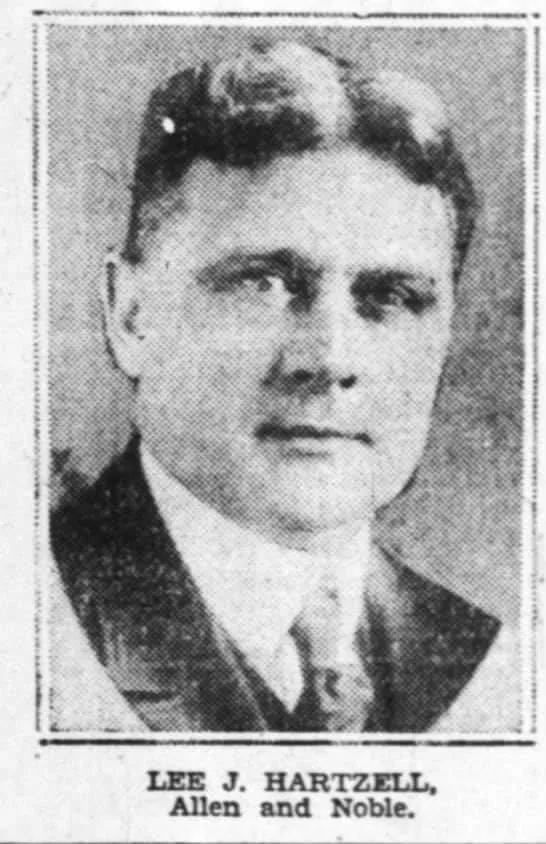
By the early twentieth century, the lake was becoming a destination. The central figure of that era was Lee J. Hartzell, a Fort Wayne attorney who acquired land from the Cochran holdings and set about selling cottage lots. One early resident left a memoir (a book from the late 1800s/early 1900s written by a woman named Curley) recalling how she and her husband bought a lot from Hartzell — and how, each time a new cottage was finished, Hartzell would mark the occasion with a chicken dinner and dancing.
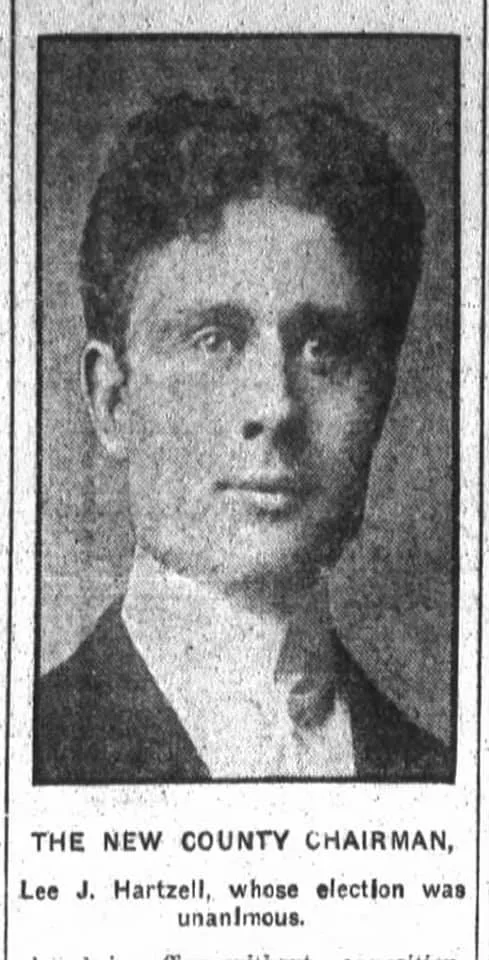
The old newspapers tell the rest of the story in vivid fragments:
- In 1908, a somber account placed early campers at "Wert's Landing," on the farm of Daniel Wert of South Milford — a reminder that people were already pitching tents along the lake more than a century ago.
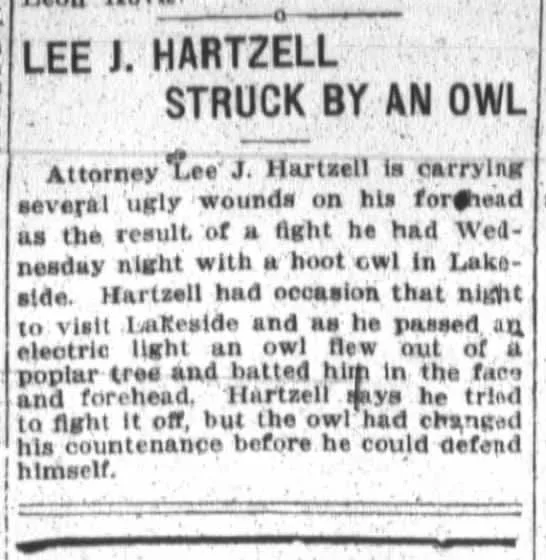
- In 1913, Hartzell himself made the news under the headline "Struck by an Owl," after a hoot owl flew out of a poplar tree and battered him near an electric light at Lakeside.
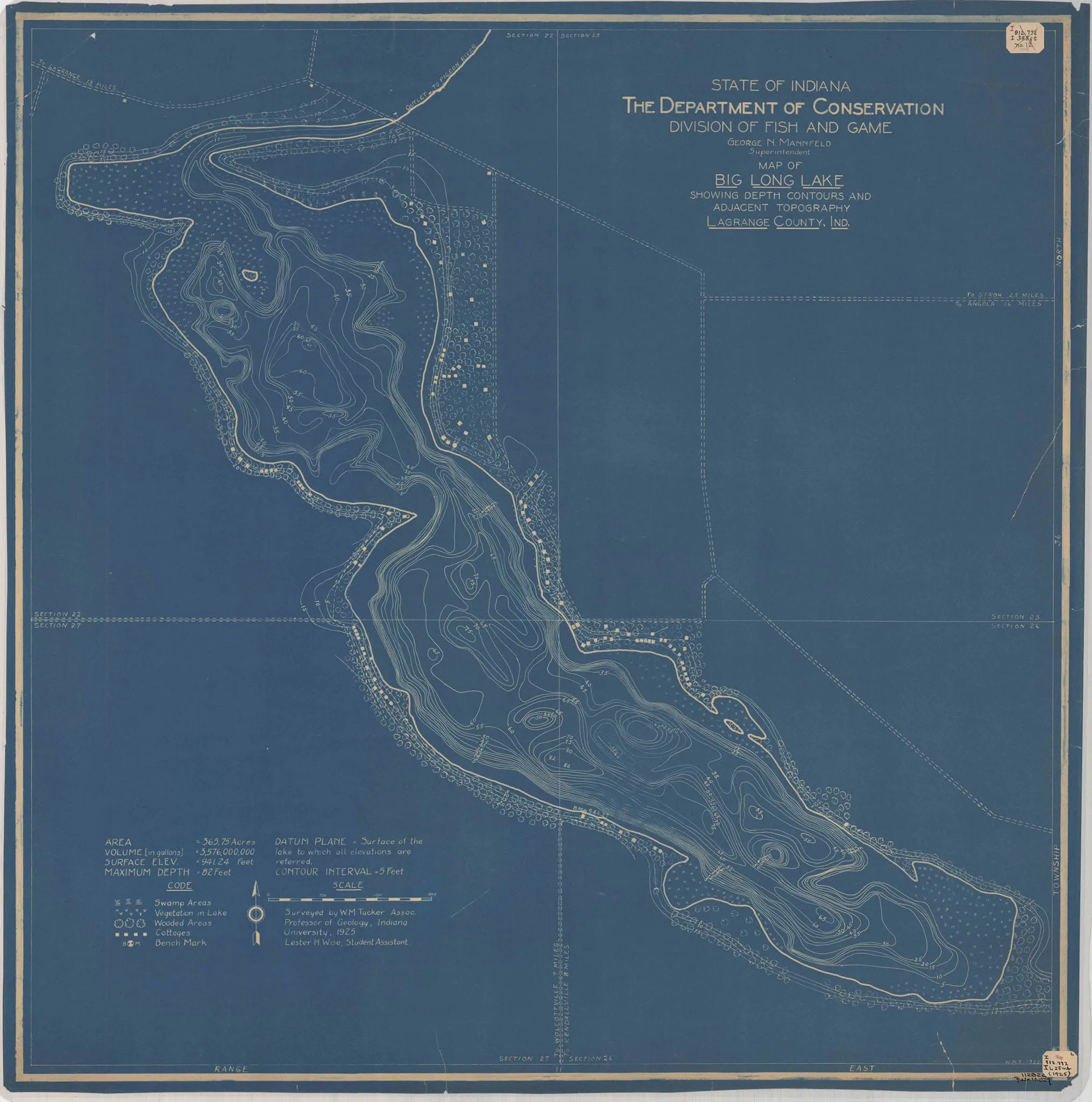
- In 1925, a formal lake survey was conducted by W. M. Tucker, a geology professor at Indiana University. His blueprint map charted the lake's depths, shoreline vegetation, and topography — and, to the delight of history-lovers today, marked the cottages that stood on the water at the time.
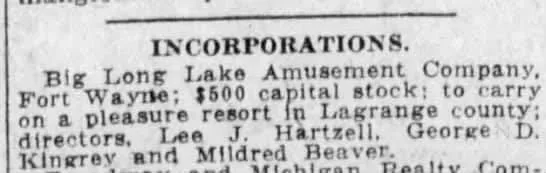
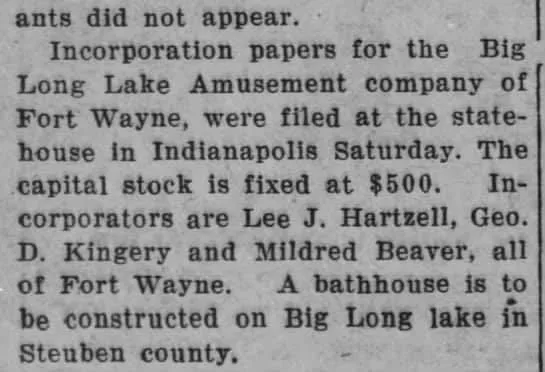
- In 1926, Hartzell joined George D. Kingery and Mildred Beaver to incorporate the Big Long Lake Amusement Company, chartered to run a "pleasure resort" in LaGrange County, with plans that included a lakeside bathhouse.
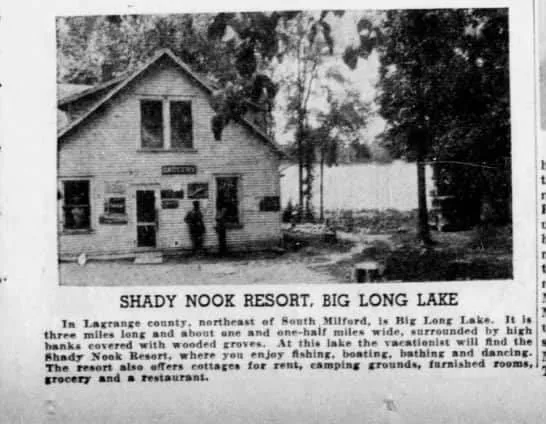
By 1940, the lake was being advertised as a full vacation retreat. Promotional copy for the Shady Nook Resort described Big Long Lake as ringed by "high banks covered with wooded groves" and invited visitors to enjoy fishing, boating, bathing, and dancing. The resort offered cottages for rent, a campground, furnished rooms, a grocery, and a restaurant. That name lives on today in the lake's Shady Nook — "The Nook" — a direct thread back to the resort era.
A lake that has changed its shape
The water itself has shifted over the generations. Longtime residents remember when the lily-pad island stood well above the surface as dry land — Martha Hire, on the lake since 1951, recalled it as a true island. More recently, a cut tree stump discovered roughly 75 feet offshore in the third basin has fueled a favorite local question: was Big Long Lake once considerably smaller than it is now?
A community handed down
The lake's story is still being written by the families who call it home. When one family purchased three lots in the Indianola section in 1955, old Native American housing stood on the prime parcel — and the purchase papers were signed inside it. Other cottages have stayed in the same families since the 1940s, passed from one generation to the next along with the memories that come with them.
From the Cochrans' tavern and mill, through Hartzell's cottages and the resort years, to the community that gathers here today, Big Long Lake has always been a place people return to.
This history was pieced together from research shared by the Big Long Lake community — including the local history work of Dawn Riggs, Linda Burrell, and Ashley Skinner — drawing on period newspapers, township maps, and family records. If you have old photos, documents, or stories of your own, they're always welcome; the history of the lake is very much a work in progress.
Stay on Big Long Lake
The Farmhouse is a lakefront rental on Big Long Lake. Read the Big Long Lake guide or ask us about dates.
Check the Big Long Lake Rental